The SAP ECC 2027 Deadline Is an Inventory Problem First
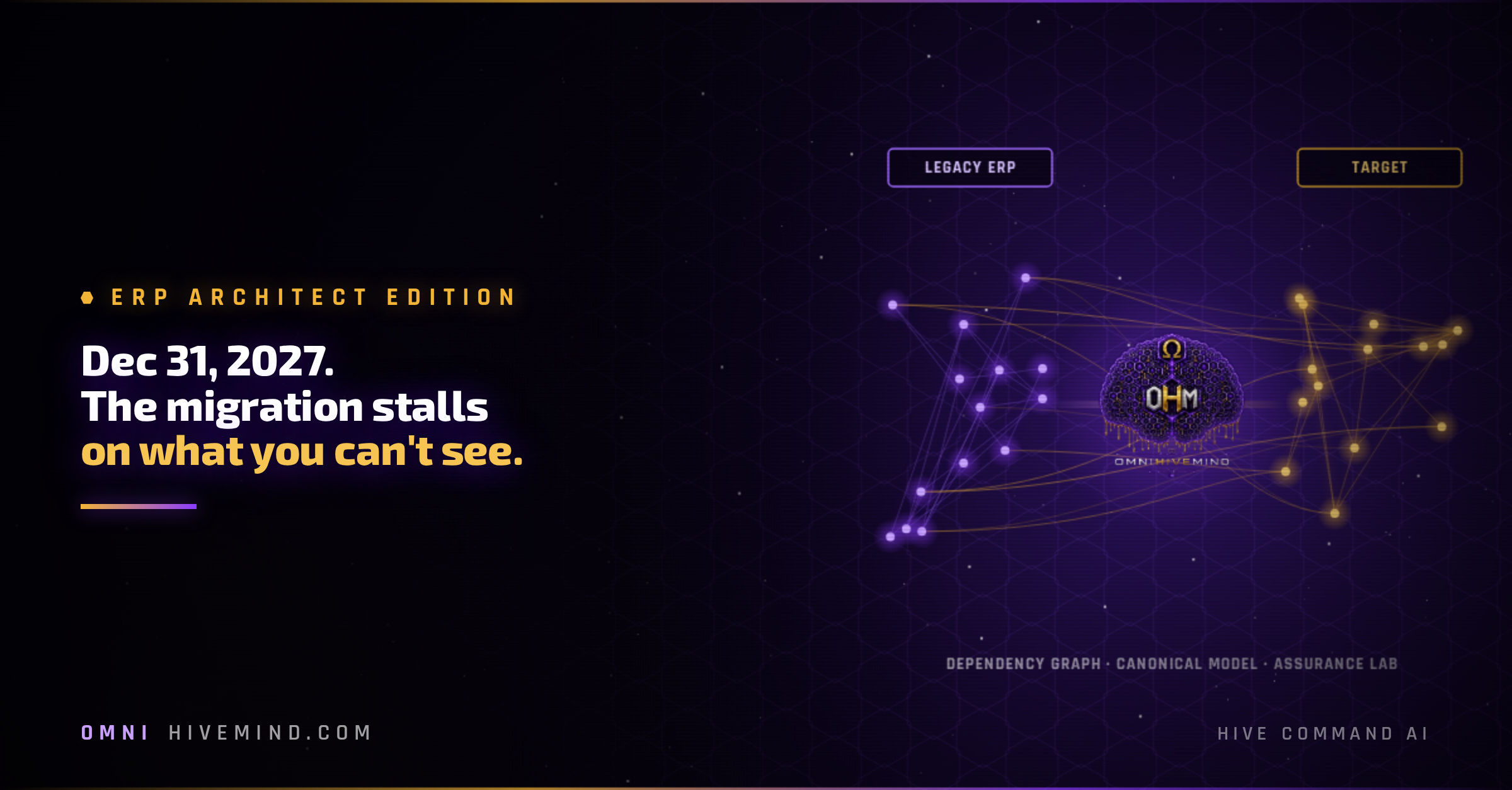
SAP's mainstream maintenance for ECC ends on December 31, 2027. That date has been on every CIO's calendar for years, and yet a large share of the ECC installed base has not yet moved. The reason is rarely the target platform, the license negotiation or the budget. The migrations that stall, in our experience, stall on a question that sounds trivial and is not: what actually depends on this system?
The dependency map you do not have
An ERP that has run for fifteen years has accumulated a dependency graph nobody drew. Interfaces to warehouse systems. Batch jobs that feed the data warehouse at 2 a.m. Custom ABAP that a contractor wrote in 2011. Reports the finance team runs from a copy of a copy. Middleware that translates for a plant system nobody has logged into since the acquisition. Identity groups that grant access to transactions through three layers of nesting.
The migration plan needs all of it. Cut over without the batch job and month-end fails. Cut over without the plant interface and a production line stops. Cut over without the identity mapping and either everyone has access or no one does.
Most programs handle this with a discovery phase: weeks of interviews, spreadsheets, scanning and workshops, producing a dependency inventory that is out of date by the time the design phase begins. Then the integration partner does it again, because they cannot sign off on someone else's spreadsheet. Then the auditors ask for the evidence.
Migration is an estate problem before it is an ERP problem
Our position at Omni Hive Mind is that ERP migration intelligence has to start from the whole estate, not from the ERP. You cannot map what depends on the ERP if you only look inside it. The dependencies live in the network, the identity system, the middleware, the endpoints and the cloud accounts, and they are recorded, partially and inconsistently, across a dozen consoles.
The ERP Architect edition of Hive Command AI approaches it in this order.
Estate discovery first. The platform builds golden records for the assets, services, interfaces and identities around the ERP, using the same connectors, IP scanning and passive observation that serve every other edition. Every record carries its source, hash, confidence and approver, so the dependency map is evidence rather than recollection.
A canonical ERP model second. Objects from SAP ECC, S/4HANA, Oracle, Dynamics, Workday, Infor, Epicor, NetSuite, Acumatica and dozens of others are mapped into one canonical model, so a dependency, a schema element or a business process means the same thing regardless of which platform it came from. Seventy-four ERP platforms are represented today.
Schema mapping and an any-to-any orchestrator third. Because the model is canonical, source-to-target mapping is a configuration exercise rather than a bespoke engineering project for every migration pair.
An assurance lab fourth. Proposed cut-over packages are simulated against the dependency graph before anyone touches production. Reconciliation evidence is produced in a form the finance organization will accept, because finance ultimately owns the sign-off.
Partner to every vendor, competitor to none
We want to be explicit about posture. Hive Command AI does not replace SAP, Oracle, Microsoft, Workday or the integration partners who implement them. It supplies dependency intelligence and reconciliation evidence to all of them. A migration that begins with a trustworthy map is a better project for the customer, the vendor and the integrator alike.
What "done" should look like
At the end of a migration, three artifacts should exist without anyone having to reconstruct them: the dependency graph as it stood at cut-over, the reconciliation evidence showing that source and target agree, and the audit trail of who approved what. If those are by-products of the platform the program ran on, the last month of the project is a review. If they are a separate deliverable, the last month is a scramble.
The 2027 deadline is fixed. The discovery phase does not have to be. Start from the estate, treat the dependency map as evidence, and the ERP part of the ERP migration becomes the tractable part.
Share this post: LinkedIn · X · Facebook · Email · Follow us on Instagram