
The platform
Hive Command AI
A single evidence layer that ITSM, security, cloud, ERP and AI programs can all trust — because it shows its work. Four layers, one code base, fourteen editions.

Architecture
Four layers, wrapped in security controls.

AI governance by design
Accountable before autonomous.
Most copilots read whatever the console exposes — secrets, tenant IDs, customer data — and send it to an external provider with no redaction proof. Agents that can change configuration are handed credentials and act without a named approver. Hive Command AI answers all of that by construction.
Blocked AI scopes: secrets and device credentials. ERP blocked scopes: ERP credentials and secrets. Live writeback disabled by default. Passwords, tokens, keys, cookies, SNMP communities and vault contents never reach a prompt, log or report.
Operating modes · the same controls in every mode
Connected, customer-hosted or air-gapped.
| Mode | AI providers | Discovery | Exports | Credentials |
|---|---|---|---|---|
| Connected SaaS tenant hosted from our colocation facility | Any of the 21 catalog providers, after dataset approval and redaction | API, agent-assisted and import-based discovery through customer connectors | Branded workbooks, reports and diagrams; leak-scanned before release | Never leave the customer boundary; broker issues scoped grants only |
| Customer-hosted your virtualization or Kubernetes | Customer-selected providers or customer-hosted models | Full connector catalog inside the customer network | Native source exports and platform formats under customer policy | Customer credential manager and PAM integration |
| Air-gapped / disconnected portable rack or customer hardware | Local inference only; no external model calls possible | Import-first discovery, IP scanner, passive observation, credentialed read-only collection | Media-set packaging for removable media; evidence packs stay on site | Local broker; secrets never exported |
Controls are enforced by the platform in every mode; the operating-mode matrix defines what is permitted, not merely recommended.
ERP Architect Edition
Any-to-any migration intelligence.
SAP ECC mainstream maintenance ends 31 December 2027. Oracle, Dynamics, Workday, Infor, Epicor, NetSuite and Acumatica estates face parallel cycles. Every program needs the same thing first: what exactly do we have, and what depends on it?
Partner posture: the edition supplies dependency intelligence and evidence to SAP, Oracle, Microsoft, Workday, Infor, Epicor, NetSuite and Acumatica programs — we partner with every vendor and compete with none. LLM access to ERP context is disabled by default and policy-gated when enabled.
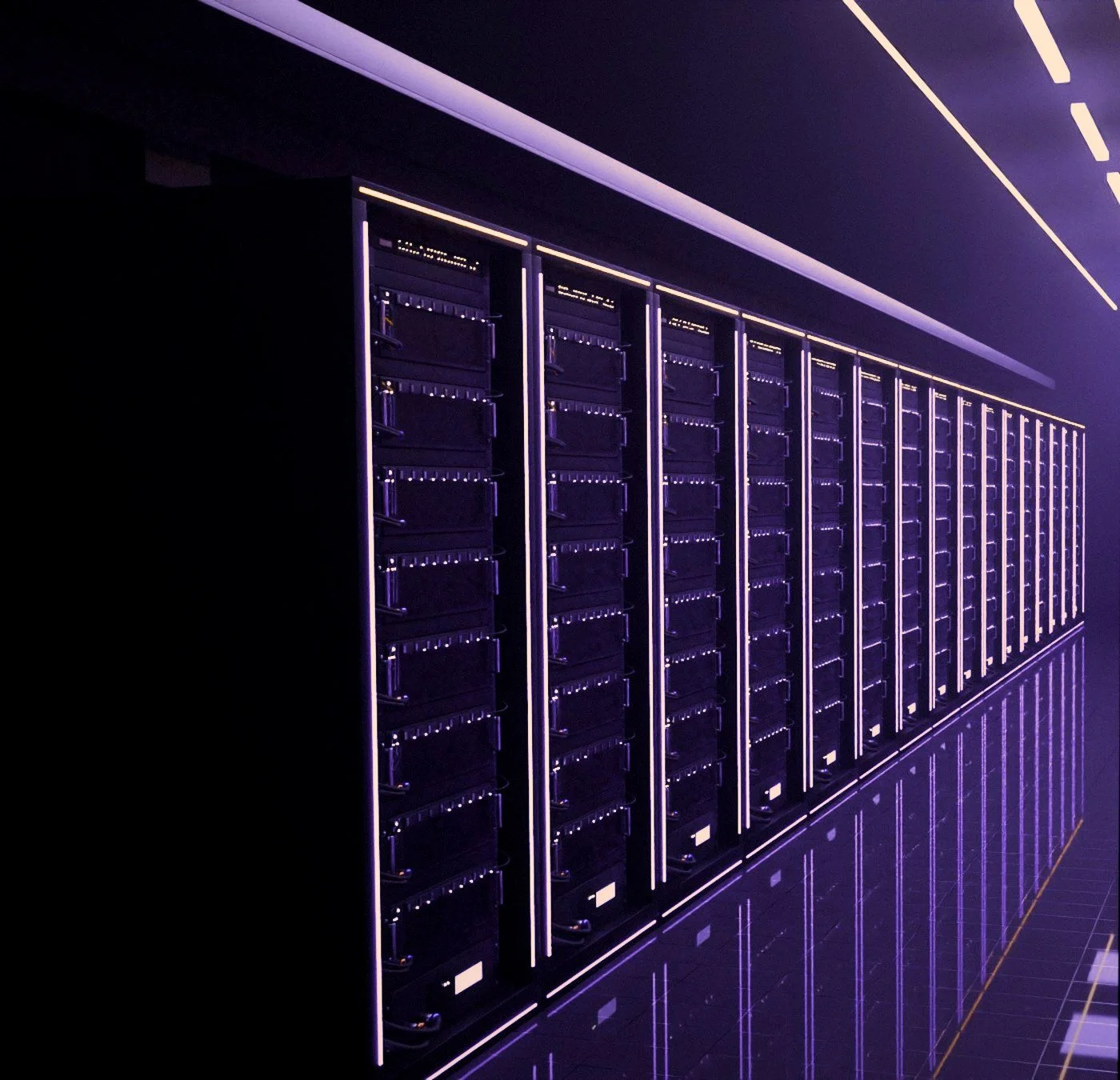
Demonstration and pilot racks
Three racks that go where SaaS cannot.
Pilot & demonstration
Cisco Nexus 100G, Supermicro GPU servers with NVIDIA H200, NVMe storage, coordinator and scan-agent nodes, online UPS, metered PDUs, road case.
Multi-tenant pilots
Cisco Nexus 400G fabric, expanded H200 capacity for concurrent pilots, high-performance storage, dual UPS.
Executive Full Platform at scale
Cisco Nexus 800G fabric, full H200 inference cluster, redundant power and cooling, field-deployable enclosure.
Racks travel to customer pilots and return to the Atlanta colocation facility as production, test and training capacity. Vendor preference: NVIDIA, Supermicro, Cisco.